
Licensed & Insured
Light Fixtures, Ceiling Fans & Electrical — Salt Lake County, UT
Lighting That Changes How Your Home Feels
The right fixture in the right place transforms a room. We install it safely, cleanly, and exactly where you want it.
Good Lighting Is the Upgrade Most Homeowners Overlook
You can repaint a room, replace the floors, and update the furniture — but if the lighting is wrong, the room still feels off. Conversely, the right ceiling fan, pendant light, or recessed lighting can make a dated room feel completely transformed.
Javier handles residential electrical work — fixture installation, fan mounting, outlet and switch replacement, and basic wiring — safely and cleanly. He's trained in electrical systems and understands how to work in older homes where the wiring isn't always what you'd expect.
We're not a full electrical contracting firm, but for the everyday electrical work that homeowners need — new fixtures, fan installs, outlet additions, dimmer switches — we're the call to make.
Scope of Work
What We Install & Fix
- Light fixture installation
- Light fixture replacement
- Ceiling fan installation
- Ceiling fan replacement
- Bathroom exhaust fan replacement
- Outdoor light fixture installation
- Porch light installation
- Motion security light installation
- Garage lighting installation
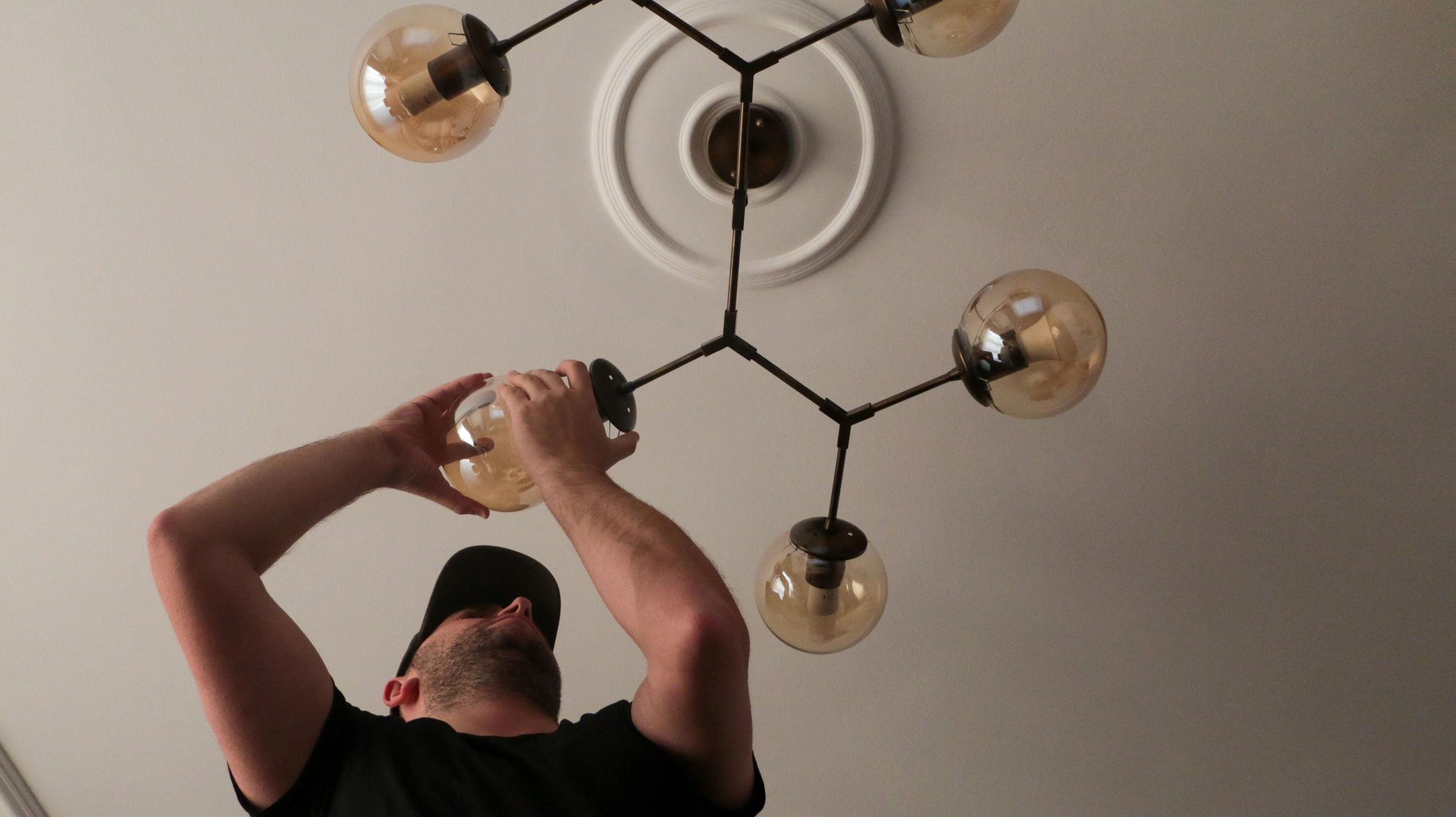
- Chandelier installation
- Pendant light installation
- Vanity light installation
- Light switch replacement
- Dimmer switch installation
- Electrical outlet replacement
- GFCI outlet replacement
- Smart switch installation
- Smart dimmer installation
- Smoke detector installation
- Carbon monoxide detector installation
- Replace outdated light fixtures
- Flickering light fixture repair
- Home lighting upgrades
- Replacing old light fixtures
Let's Talk About Your Project?
The JKV Difference
Why Homeowners in Salt Lake County Choose JKV
Safe, Code-Compliant Work
Electrical work done wrong is a fire hazard. Javier understands residential wiring and does the work safely — no jury-rigged connections, no skipped ground wires.
Clean Installations
No dangling wires, no visible junction boxes, no fixtures that sit crooked. We mount everything flush, level, and finished.
Honest About Scope
If a job requires a specialist for panel work or new circuits, we'll tell you that upfront — not after we've started and discovered a problem.
Frequently Asked Questions
Lights, Fans & Electrical Questions Homeowners Often Ask
Whether you're replacing an outdated fixture, installing a ceiling fan, or trying to understand why something stopped working, it's natural to have questions before getting started. These answers are here to help you feel more informed and confident before your project begins.
Can you replace my light fixtures, ceiling fans, and other electrical fixtures?
Yes. We regularly help homeowners replace existing light fixtures, ceiling fans, bathroom exhaust fans, vanity lights, exterior lights, and many other common electrical fixtures as part of remodeling projects and home improvements.
Every project begins by looking at the existing fixture, the condition of the mounting location, and whether the replacement fixture is compatible with what's already in place. Sometimes it's as straightforward as replacing an outdated light. Other times we may discover the existing electrical box, mounting method, or surrounding drywall needs attention before the new fixture can be installed properly.
One thing that surprises many homeowners is that installing a beautiful fixture is only part of the project. Making sure it's securely mounted, properly aligned, and complements the finished room often takes just as much care as making the electrical connections themselves.
That's one reason we believe every installation should begin with understanding the existing conditions instead of assuming every home is built the same way.
The fixture may be new, but a successful installation starts with understanding what's already there.
JKV Tip: If you've already purchased a new fixture, keep the installation instructions and all of the hardware together in the original box. It often makes installation much smoother.
How should I prepare before electrical fixture installation begins?
Preparing the room ahead of time helps protect your belongings and allows work to begin as soon as we arrive.
Before installation, it's important to remove furniture, decorations, lamps, fragile items, wall décor, and personal belongings from the immediate work area whenever possible. If we're installing a ceiling fan or overhead light, clearing the space below gives us room to safely set up ladders and work comfortably. For vanity lights, bathroom fixtures, or wall-mounted lighting, removing items from nearby countertops or shelves is also very helpful.
We know moving things isn't anyone's favorite part of a project, but we've found that a clear workspace protects your belongings while allowing us to focus on completing the installation safely and efficiently.
That's one reason we believe preparing the room is part of preparing for a successful project. A little planning beforehand helps everything go much more smoothly.
A clear workspace helps protect the things you care about and allows us to focus on the work you hired us to do.
JKV Tip: If something is fragile, valuable, or sentimental, it's always safest to remove it from the work area before installation begins.
Can I replace my existing light fixture with any fixture I want?
Sometimes yes—but not always.
Many homeowners are surprised to learn that not every replacement fixture is automatically compatible with the existing location. Ceiling fans, heavy chandeliers, oversized fixtures, and certain specialty lighting may require different mounting hardware or support than a standard light fixture. Ceiling height, fixture size, room layout, and the condition of the existing electrical box can also affect what's appropriate for the space.
One thing we've learned is that homeowners often choose a fixture because they love the way it looks, which makes perfect sense. Our job is helping determine whether it's also a good fit for the location where it will be installed.
That's one reason we believe it's worth looking at both the fixture and the existing installation before making assumptions. Understanding how the two work together usually leads to a smoother installation and a better finished result.
The best fixture isn't simply the one you love in the showroom—it's the one that also fits your home well.
JKV Tip: If you're shopping for a new fixture, save the product information or web link before your estimate. It can be helpful when discussing compatibility and installation.
Why doesn't my light, switch, or outlet seem to be working correctly?
That's a question with several possible answers, which is why it's important not to jump straight to replacing parts.
Sometimes the issue is as simple as a worn-out switch or an aging fixture. Other times the problem may be related to a loose connection, a tripped breaker, a failed component within the fixture, or another issue that's affecting how it operates. The visible symptom isn't always the actual cause.
One thing that surprises many homeowners is that replacing the light fixture itself doesn't always solve the problem. Taking a little time to understand what's actually happening often prevents replacing something that wasn't causing the issue in the first place.
That's one reason we believe good repairs begin with good diagnosis. Understanding the problem before recommending a solution usually saves homeowners both time and frustration.
Replacing parts without understanding the problem is often more expensive than taking a few extra minutes to diagnose it correctly.
JKV Tip: Before your estimate, make a note of exactly what the fixture is—or isn't—doing. Details like flickering, humming, working intermittently, or only failing at certain times can be very helpful when evaluating the issue.
Can you rewire my entire house or perform major electrical work?
This is an excellent question because not all electrical work falls into the same category.
Some projects—such as replacing a light fixture, installing a ceiling fan, changing a bathroom exhaust fan, or replacing similar electrical fixtures—are very different from rewiring an entire home, replacing service panels, or performing major electrical system upgrades.
Some electrical projects require a licensed electrician, and we believe those projects should be handled by someone who specializes in that work. While we regularly install and replace many common electrical fixtures as part of remodeling and home improvement projects, larger electrical work is something we prefer to leave to trusted licensed professionals.
One thing we've learned is that homeowners appreciate honesty. We'd much rather recommend the right professional than try to be everything to everyone.
That's one reason we believe doing what's best for the homeowner is more important than trying to do every project ourselves. Over the years we've developed relationships with licensed electrical professionals we trust and are happy to recommend when a project calls for their expertise.
Knowing when to bring in the right specialist is part of taking good care of a homeowner.
JKV Tip: If you're not sure whether your project requires a licensed electrician, ask. We're always happy to explain the difference and point you in the right direction if needed.
Can you install a ceiling fan where there isn't one now?
Sometimes yes—but it depends on what's already inside the ceiling.
Replacing an existing ceiling fan is often very different from installing a brand-new one where no fixture currently exists. A new location may require additional electrical work, proper support for the weight of the fan, and other considerations before installation can begin.
One thing homeowners don't always realize is that ceiling fans are heavier and create movement while they operate. That's why the structure supporting the fan is just as important as the fan itself.
That's one reason we believe it's important to evaluate the existing conditions before promising what's possible. Looking at the space first helps everyone understand the best approach for the project.
The right installation begins with understanding what's above the ceiling—not just what's below it.
JKV Tip: If you're considering adding a ceiling fan to a room that has never had one, mention it during your estimate. We'll help you understand what's involved before you purchase the fixture.
How long does a typical light fixture or ceiling fan installation take?
One of the biggest questions homeowners have isn't actually about the fixture—it's about how long they'll have part of their home disrupted.
The answer depends on what we're installing and what we discover once the existing fixture is removed. Replacing a simple light fixture is often straightforward, while installing a heavier fixture, replacing a ceiling fan, or addressing issues behind the existing fixture may naturally require additional time.
One thing we've learned is that homeowners usually aren't looking for an exact number of hours. They simply want to know what to expect so they can plan their day and feel comfortable with the process.
That's one reason we believe communication starts before the first tool comes out. Walking through the expected timeline and explaining what we're doing helps homeowners feel informed instead of wondering what's happening.
A project usually feels shorter when you understand what's happening each step of the way.
JKV Tip: If you're scheduling around work meetings, family activities, or another contractor's visit, let us know during the estimate. It's much easier to plan ahead than adjust once work begins.
What usually surprises homeowners during electrical fixture projects?
Probably how much of the project has nothing to do with electricity.
Many homeowners picture removing one fixture and installing another. What often surprises them is everything else involved—repairing drywall around an old fixture, touching up paint, adjusting mounting hardware, assembling new fixtures, leveling them properly, making sure ceiling fans are balanced, and leaving the finished room looking complete.
Another surprise is how different older homes can be from newer ones. Every home has its own history, and sometimes that means taking a little extra time to understand what's already there before installing something new.
That's one reason we believe every installation deserves the same care, whether it's replacing one light fixture or updating several throughout the home. The little finishing details are often what homeowners notice long after the project is complete.
People usually admire the new fixture—but it's the quality of the installation that allows them to forget about it and simply enjoy the room.
JKV Tip: If you're replacing several fixtures throughout your home, make a list before your estimate. Looking at everything together often creates a more efficient plan than treating each fixture as a separate project.
Why does my light flicker, buzz, or work only sometimes?
This is one of those situations where it's best not to assume the fixture itself is the problem.
Flickering lights, buzzing switches, intermittent outlets, or fixtures that work one day and not the next can happen for a variety of reasons. Sometimes the issue is with the fixture, while other times it may involve the bulb, the switch, a loose connection, or something else entirely.
One thing we've learned is that replacing parts without understanding the cause often leads to frustration and unnecessary expense. A little time spent identifying what's actually happening usually leads to a much better solution than simply guessing.
That's one reason we believe every repair should begin with understanding the problem before recommending the fix. Homeowners deserve answers—not assumptions.
The symptom isn't always the problem. Taking time to understand what's happening usually leads to a better repair.
JKV Tip: Before your estimate, make a note of exactly what the fixture is doing. Does it flicker only when another appliance is running? Does it buzz? Does it happen all the time or only occasionally? Those details are often very helpful.
Can I purchase my own light fixtures or ceiling fans?
Absolutely. Many homeowners enjoy choosing their own lighting because it's one of the finishing touches that gives a home its personality. Whether you've found the perfect chandelier, picked out new bathroom vanity lights, or ordered ceiling fans online, we're happy to install homeowner-supplied fixtures in many situations.
One thing that surprises homeowners is that not all fixtures are created the same. Some arrive with missing hardware, damaged parts, incomplete instructions, or mounting systems that aren't compatible with the existing electrical box. Occasionally a fixture that looks perfect online simply isn't the right size or weight for the location where it's going.
That's one reason we like discussing new fixtures before installation whenever possible. A quick conversation can often answer questions about compatibility, mounting, or anything else that might affect the finished project before installation day arrives.
We think it's important for homeowners to enjoy choosing the fixtures they'll see every day. Our role is helping make sure those fixtures are installed properly and look like they belong in your home.
The right fixture should complement your home—not complicate the installation.
JKV Tip: Leave new fixtures in their original packaging and keep all of the instructions and hardware together. It makes installation much smoother and helps prevent small parts from getting misplaced.
What should I know after my new fixtures or ceiling fans are installed?
Most homeowners are excited to enjoy their updated space, and fortunately there's very little ongoing maintenance required.
Occasionally checking that light bulbs are the correct type, keeping fixtures clean according to the manufacturer's recommendations, and making sure ceiling fan blades stay free of dust are usually all that's needed for normal care. If a fixture ever begins making unusual noises, flickering, or operating differently than it did when it was installed, it's a good idea to have it looked at rather than simply ignoring the change.
One thing we've learned is that small concerns are often much easier to address than larger ones. Paying attention when something changes helps prevent unnecessary frustration later.
That's one reason we believe a project doesn't end the day we pack up our tools. Helping homeowners enjoy their improvements long after installation is simply part of doing the job well.
A well-installed fixture should become part of your home—not something you have to keep thinking about.
JKV Tip: Keep the manufacturer's instructions and any extra hardware that came with your new fixture. They can be surprisingly helpful years down the road if you ever need replacement parts or decide to update the fixture again.
How do I know if my lighting or electrical fixture project is a good fit for JKV?
That's a question we genuinely appreciate because every home—and every homeowner—is a little different.
Some people simply want to update outdated light fixtures. Others are replacing noisy bathroom exhaust fans, installing ceiling fans, upgrading exterior lighting, or completing the finishing touches after a remodeling project. Sometimes it's about improving appearance, and other times it's about making a room more comfortable and enjoyable to use.
One thing we've learned after working in so many homes is that the best conversations usually begin with understanding what isn't working for the homeowner today. Once we understand that, it's much easier to recommend solutions that make sense instead of simply replacing fixtures because they're old.
That's one reason we believe our job starts with listening, not selling. Whether your project is replacing one fixture or updating lighting throughout your home, our goal is to help you understand your options, answer your questions honestly, and leave you feeling confident about your decisions.
The best lighting project isn't about changing fixtures—it's about improving the way you experience your home every day.
JKV Tip: If you're planning several updates throughout your home, make a list before your estimate. Looking at everything together often makes it easier to prioritize projects and create a plan that fits both your home and your budget.
Other Services You Might Need
Serving homeowners throughout Salt Lake County and the Wasatch Front
Ready to Get This Done?
Call or text us for a free consultation. We show up, we finish the job, and we treat your home like it's ours.