
Licensed & Insured
TV Mounting, Shelves & Custom Builds — Salt Lake County, UT
Your TV on the Wall. Your Stuff Organized. Done Right.
Stud-mounted, level, wire-managed, and clean. No visible cables, no tilted screens, no drywall anchors holding a 75-inch TV.
The Details That Make a TV Mount Look Like It Belongs There
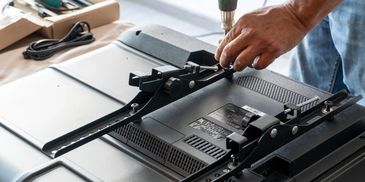
Mounting a TV sounds simple. It's not — not if you want it done right. Finding studs in the right location, running cables through the wall, getting the mount perfectly level, managing the wire clutter — there's a reason people call us instead of doing it themselves.
Javier mounts TVs the right way: into studs, level, with cables managed cleanly. If you want in-wall cable management, we can do that too. The result is a clean, professional installation that looks like it was always supposed to be there.
Beyond TV mounting, we build custom shelving, floating shelves, built-in storage, and entertainment centers. If you can sketch it, we can usually build it — and it'll be level, sturdy, and finished properly.
Scope of Work
What We Build & Install
- TV mounting
- TV wall mounting
- Above fireplace TV mounting
- Large TV installation
- TV wire concealment
- Soundbar installation
- Floating shelf installation
- Wall shelf installation
- Garage shelving installation
- Closet shelving installation
- IKEA furniture assembly
- Furniture assembly
- Office furniture assembly
- Bed frame assembly
- Dresser assembly
- Desk assembly
- Bookcase assembly
- Entertainment center assembly
- Wall-mounted cabinet installation
- Picture hanging
- Mirror hanging
- Curtain rod installation
- Blind installation
- Wall-mounted accessory installation
Let's Talk About Your Project?
The JKV Difference
Why Homeowners in Salt Lake County Choose JKV
Stud-Mounted, Always
We don't use drywall anchors for TVs. Period. Every mount goes into studs or a proper backing — because a 65-inch TV falling off the wall is not something you want to experience.
Clean Wire Management
Visible cables ruin the look of a wall-mounted TV. We run cables through the wall or install a clean raceway so the installation looks finished.
Level. Every Time.
Javier uses a laser level, not eyeballing it. Your TV will be straight, your shelves will be level, and nothing will drive you crazy every time you look at it.
Frequently Asked Questions
TV Mounts, Shelves & Builds Questions Homeowners Often Ask
Whether you're planning to mount a television, install floating shelves, assemble furniture, or organize a closet or garage, it's natural to have questions before getting started. These answers are here to help you feel more informed and confident before your project begins.
What kinds of installation and assembly projects does JKV do?
More than most homeowners realize.
We install TVs, floating shelves, curtain rods, blinds, mirrors, artwork, closet organizers, garage storage systems, wall-mounted cabinets, pre-manufactured shelving, pegboards, and many other household items. We also assemble furniture from manufacturers like IKEA and other ready-to-assemble products that can be frustrating and time-consuming to put together.
One thing we've learned is that many of these projects look simple until you open the box or start drilling into the wall. A project that seems like it should take thirty minutes often turns into an entire afternoon.
That's one reason we enjoy helping with these kinds of projects. They're often the finishing touches that make a house feel more organized, more functional, and more like home.
Sometimes it's the small projects that make the biggest difference in how you enjoy your home.
JKV Tip: If you've been collecting several small projects, consider making a list before your estimate. Completing them during the same visit is often more convenient than scheduling multiple appointments.
Can you mount my TV on any wall?
In many cases, yes.
TVs can often be mounted on wood-framed walls, drywall with proper framing behind it, masonry, concrete, and other suitable surfaces. The most important part isn't the wall covering—it's making sure the mounting hardware is properly supported by the structure behind it.
One thing we've learned is that homeowners are often more concerned about whether the TV will be level than they are about what's holding it up. Both matter. A properly mounted television should not only look good—it should also be securely supported for years to come.
That's one reason we take the time to locate proper mounting points and use hardware that's appropriate for both the television and the wall it will be mounted to.
A TV should look like it belongs on the wall—not like it's hoping to stay there.
JKV Tip: Before purchasing a TV mount, check that it's designed for both your television's size and weight. Not all mounts are created equal.
Can you assemble furniture that I purchased?
Absolutely.
Whether it's a bookshelf, entertainment center, desk, bed frame, storage cabinet, outdoor furniture, or ready-to-assemble furniture from IKEA or another manufacturer, we're happy to help. We'll carefully follow the manufacturer's instructions and make sure everything is assembled correctly before we're finished.
One thing we've learned is that many homeowners underestimate how much time furniture assembly can take. Hundreds of parts, dozens of fasteners, and unclear instructions can quickly turn an exciting purchase into a frustrating weekend.
That's one reason we like these projects. Instead of spending hours sorting hardware and deciphering instruction books, you get to enjoy the finished product.
Furniture should be fun to use—not stressful to assemble.
JKV Tip: Before assembly day, open each box and make sure everything arrived without shipping damage. It's much easier to exchange a damaged part before assembly begins than afterward.
How should I prepare before installation day?
Fortunately, very little preparation is usually needed.
Clearing the immediate work area, moving fragile decorations, and making sure we have enough room to safely work is usually all that's required. If we're assembling furniture, having the unopened boxes together in one location also helps keep the project organized.
One thing we've learned is that homeowners often think they need to unpack everything before we arrive. In most cases, it's actually easier if everything remains packaged until we're ready to begin so smaller parts don't get misplaced.
That's one reason we like walking through the project together before getting started. A few minutes of planning usually makes the rest of the installation go much more smoothly.
Good preparation makes the project easier—not more complicated.
JKV Tip: If several installations will happen in the same room, let us know beforehand. Completing everything during one visit often makes the project much more efficient.
How high should my TV be mounted?
There's no single "correct" height—it depends on how you'll be watching it.
A TV that's mounted above a fireplace may end up higher than one in a family room, while a bedroom television is often positioned differently than one in a living room. The goal is to make watching comfortable without constantly looking too far up or down.
One thing we've learned is that homeowners often focus on where the wall looks best instead of where the TV will actually be used. The most comfortable viewing position is usually determined by where you'll be sitting, not by the center of the wall.
That's one reason we like discussing placement before drilling the first hole. Taking a few extra minutes to think through furniture layout, viewing angles, glare from windows, and future changes usually leads to a much better result.
It's much easier to spend five extra minutes planning than to patch holes and move a TV later.
JKV Tip: If you're buying new furniture soon, let us know. Mounting the TV around your future layout instead of your current one can save you from relocating it later.
Can you hide the wires behind my TV?
Often, yes—but it depends on the wall and the type of installation.
Some cable management systems are designed to hide wires neatly on the surface of the wall, while others route low-voltage cables behind the wall for a cleaner appearance. Every home is different, so we'll discuss the available options during your estimate.
One thing we've learned is that homeowners are often just as excited about hiding the wires as they are about mounting the TV itself. A clean installation can completely change the appearance of a room.
That's one reason we believe finishing details matter. Mounting the TV securely is important—but taking the time to create a clean, organized appearance helps the entire space feel more finished.
Sometimes the best part of a TV installation is everything you don't see.
JKV Tip: If you plan on adding a soundbar, gaming system, or streaming device later, mention it during your estimate. Planning for future cables now is much easier than adding them afterward.
What usually surprises homeowners during installation projects?
Most homeowners are surprised by how different the inside of a wall can be from what they imagined.
Stud locations aren't always where you expect them. Electrical wiring, plumbing, ductwork, fire blocking, or other hidden conditions can sometimes affect where items can safely be mounted. Even walls that appear perfectly straight may not be perfectly level.
One thing we've learned is that successful installations are often about adapting to what's behind the wall—not simply following a tape measure. Every home is a little different, and sometimes the best location is slightly different than the original plan.
That's one reason we take the time to evaluate the space before making permanent holes. A little planning helps avoid unnecessary repairs and usually produces a cleaner, stronger installation.
Good installations aren't just measured—they're thoughtfully planned.
JKV Tip: If there's a specific location where you'd like something mounted, let us know before installation begins. We'll gladly explain whether it's the best location or recommend a safer or stronger alternative if needed.
How do I know if my wall can safely support shelves, cabinets, or heavy items?
That's one of the most important questions you can ask.
The answer depends on what you're hanging, how much it weighs, what's behind the wall, and how the mounting hardware is installed. Drywall by itself isn't designed to support heavy loads, but when shelves, cabinets, and other items are properly attached to structural framing—or when the appropriate anchors are used for lighter loads—they can provide years of reliable service.
One thing we've learned is that homeowners often assume all wall anchors are the same. They're not. Different materials, different weights, and different mounting situations require different fastening methods. Choosing the right hardware is every bit as important as choosing the right shelf.
That's one reason we focus on what's behind the wall—not just what will be visible afterward. A beautiful installation should also be a safe one.
What holds something up is usually far more important than what everyone sees.
JKV Tip: If you know you'll be displaying heavier items like books, collectibles, dishes, or tools, let us know during your estimate. Planning for the final weight helps us choose the best mounting method from the beginning.
Can I buy my own TV mount, shelves, or storage system?
Absolutely.
Many homeowners enjoy choosing products that fit their style, storage needs, and budget. Whether you've already purchased a TV mount, floating shelves, garage storage system, closet organizer, or ready-to-assemble furniture, we're happy to install or assemble it as long as it's designed for the intended application.
One thing we've learned is that not every product is built the same. Two shelves may look nearly identical online but have very different weight ratings, hardware quality, and installation requirements. Spending a little more on a quality product often leads to a much better long-term experience.
That's one reason we encourage homeowners to think about how something will be used every day—not just how it looks in the box.
The best installation starts with choosing products that are designed to last.
JKV Tip: Before ordering online, verify the dimensions, weight limits, and included hardware. Taking a few minutes to review the specifications can help prevent surprises on installation day.
How can I make these kinds of projects fit my budget?
You don't have to complete every project at once.
Many homeowners have a growing list of things they'd like to accomplish—a TV to mount, shelves to install, furniture to assemble, pictures to hang, blinds to install, or garage storage to organize. Instead of scheduling separate appointments over several months, many of these projects can often be completed during the same visit.
One thing we've learned is that homeowners are often surprised by how much can be accomplished in a single day with a little planning. Grouping projects together usually creates a more efficient visit and helps your home come together much faster.
That's one reason we encourage homeowners to make a running list whenever something comes to mind. Looking at the entire list together often makes it easier to prioritize and plan.
Several small improvements often have a bigger impact than one large project.
JKV Tip: Keep a note on your phone whenever you notice something that needs to be installed, adjusted, or assembled. By the time you're ready to schedule, you'll have a complete list instead of trying to remember everything.
How can I keep shelves, TV mounts, and other wall-mounted items safe over time?
Fortunately, there's very little maintenance required—but a quick inspection every now and then is a good idea.
Over time, homes naturally expand and contract with seasonal changes, furniture gets bumped, and shelves or wall-mounted items may begin carrying more weight than they were originally designed for. Occasionally checking that fasteners remain tight, brackets are secure, and nothing has shifted helps ensure everything continues performing the way it should.
One thing we've learned is that most installation problems don't happen because something was installed incorrectly—they happen because the way it's being used changes over time. A shelf that originally held a few decorations may eventually be supporting dozens of heavy books.
That's one reason we encourage homeowners to think about how they'll use an installation not only today, but years from now. A little awareness helps protect both your belongings and your home.
Even a great installation deserves an occasional checkup.
JKV Tip: If you ever notice a shelf pulling away from the wall, a TV mount shifting, or hardware becoming loose, stop adding weight and have it inspected before the problem becomes larger.
How do I know if my installation or assembly project is a good fit for JKV?
If your project involves mounting, assembling, organizing, or installing pre-manufactured products in your home, there's a very good chance we're a great fit.
Whether it's mounting a television, installing floating shelves, hanging mirrors, assembling furniture, putting together garage storage, installing closet organizers, hanging blinds or curtain rods, or tackling a list of projects you've been meaning to finish, we enjoy helping homeowners complete the details that make a house feel finished.
One thing we've learned is that these projects are often underestimated. They may seem small on their own, but when they're completed correctly, they improve the way your home functions every single day. That's why we approach them with the same care and attention we'd give a much larger remodeling project.
That's one reason we believe no project is "too small" to deserve quality workmanship. Whether we're mounting one television or helping complete an entire punch list, our goal is the same: do it safely, do it correctly, and leave you feeling glad it's finally done.
Sometimes the projects you've been putting off the longest become the ones you're happiest to cross off the list.
JKV Tip: If you've been saying, "I've been meaning to get that done," you're probably not talking about just one project. Make a list before your estimate—we're often able to complete several installations during the same visit.
Other Services You Might Need
Serving homeowners throughout Salt Lake County and the Wasatch Front
Ready to Get This Done?
Call or text us for a free consultation. We show up, we finish the job, and we treat your home like it's ours.